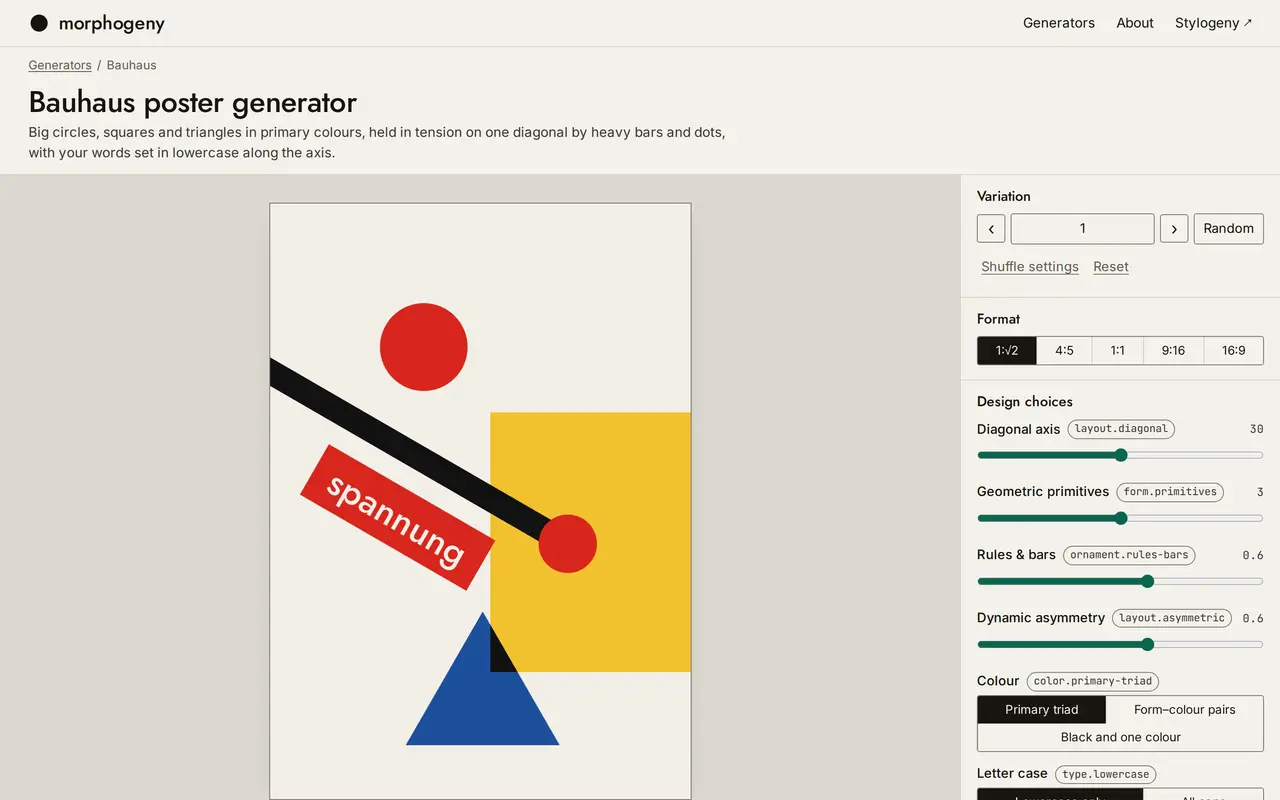
An atlas of graphic-design styles
Stylogeny
From Islamic geometry and ukiyo-e to Ghanaian movie posters and neo-brutalist web, each style is described by the design choices that make it, with its history, its lineage, real works and sources.
- Describe a project in plain words and get a few styles that fit, with the reasons
- Mix styles and see which design choices they settle between them
- Analyse a website to see which styles it draws on
Work began on 15 October 2026. The root of the family. The other three grew from its engine, its method or its data.
- 377
- styles
- 150
- design choices in 10 facets
- 13
- world regions
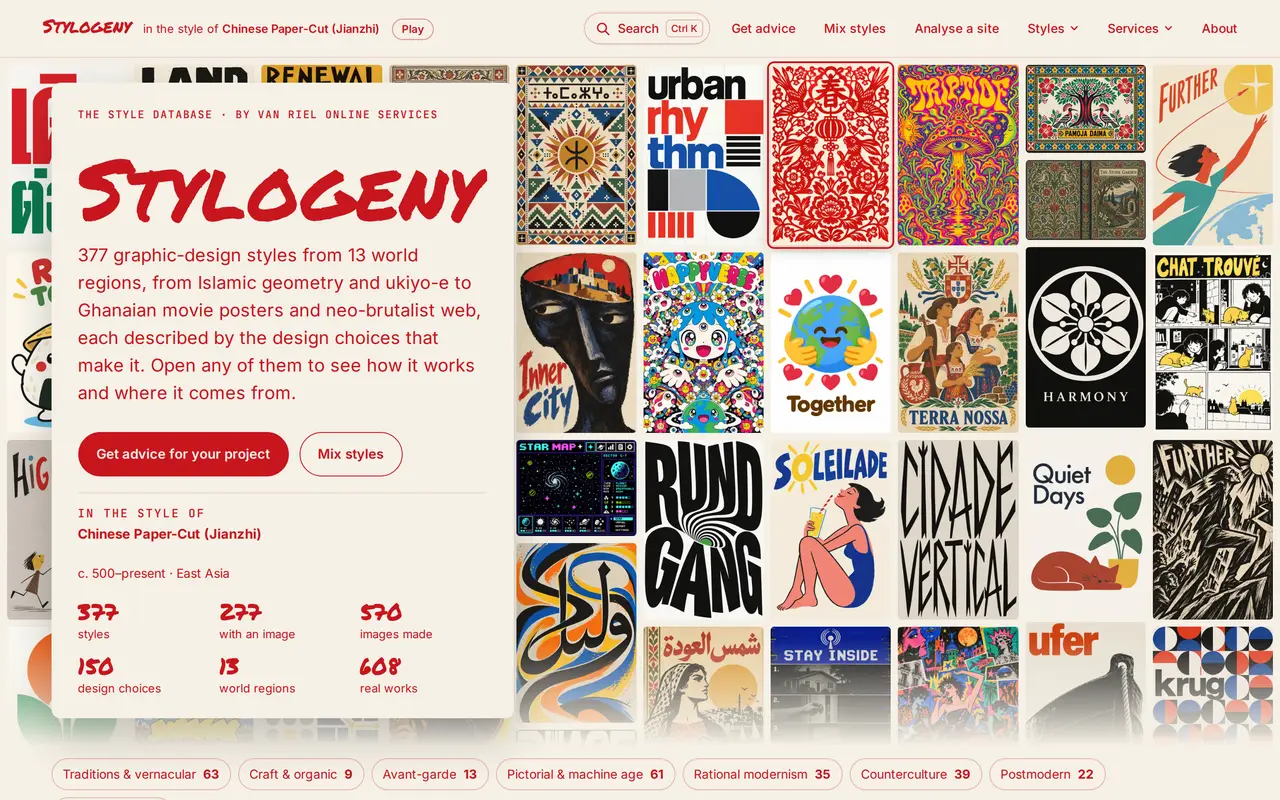
An atlas of photographic styles
Lumogeny
Know the look before you light it. Lumogeny shows where the lights stand for each photographic style, from daguerreotype portraits to the Düsseldorf School, and turns the one you want into a shoot sheet for your own camera, lenses and lights.
- Compare rendered set-ups, each a picture with its light plan drawn to scale
- Move one softbox round a clay head in the light lab: butterfly, loop, Rembrandt, split
- Describe a job and get the styles that fit it
Branched from Stylogeny on 18 October 2026. It runs on Stylogeny’s engine, with photographic choices (light, lens, pose, process) in place of graphic ones. The atlas behind it is called Photogeny.
- 43
- photographic styles
- 295
- photographic choices in 15 groups
- 99
- photographs from open museum collections
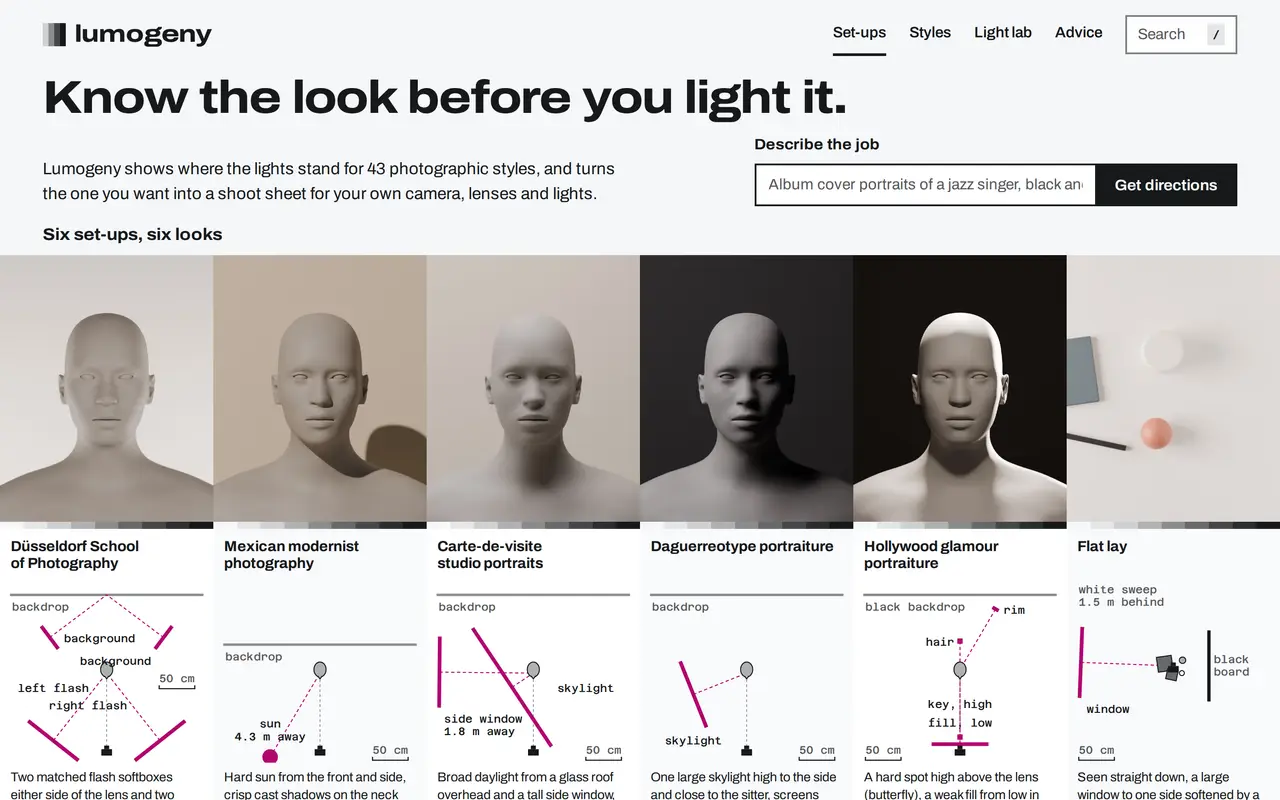
An atlas of quotations
Quotogeny
Of the 271 quotes traced so far, 95 are not theirs in the form people share them.
Did they really say it? Quotogeny looks for a quote, word for word, in the full text of the works it is credited to. Each entry gives the verdict, the passage, who speaks it in the scene and the sources.
- Paste a quote you saw and learn whether it is genuine, a paraphrase, misattributed or not found
- Find a genuine quote for an occasion, with where it is and what to know before using it
- Read the original, the scene and the speaker, and how a line is usually misread
Branched from Stylogeny on 20 October 2026. Quotes are classified by the choices they are made of (theme, claim, figure, voice, stance, tone, shape, use), the way Stylogeny classifies styles.
- 271
- quotes traced so far
- 34
- people they are credited to
- 95
- not theirs as shared
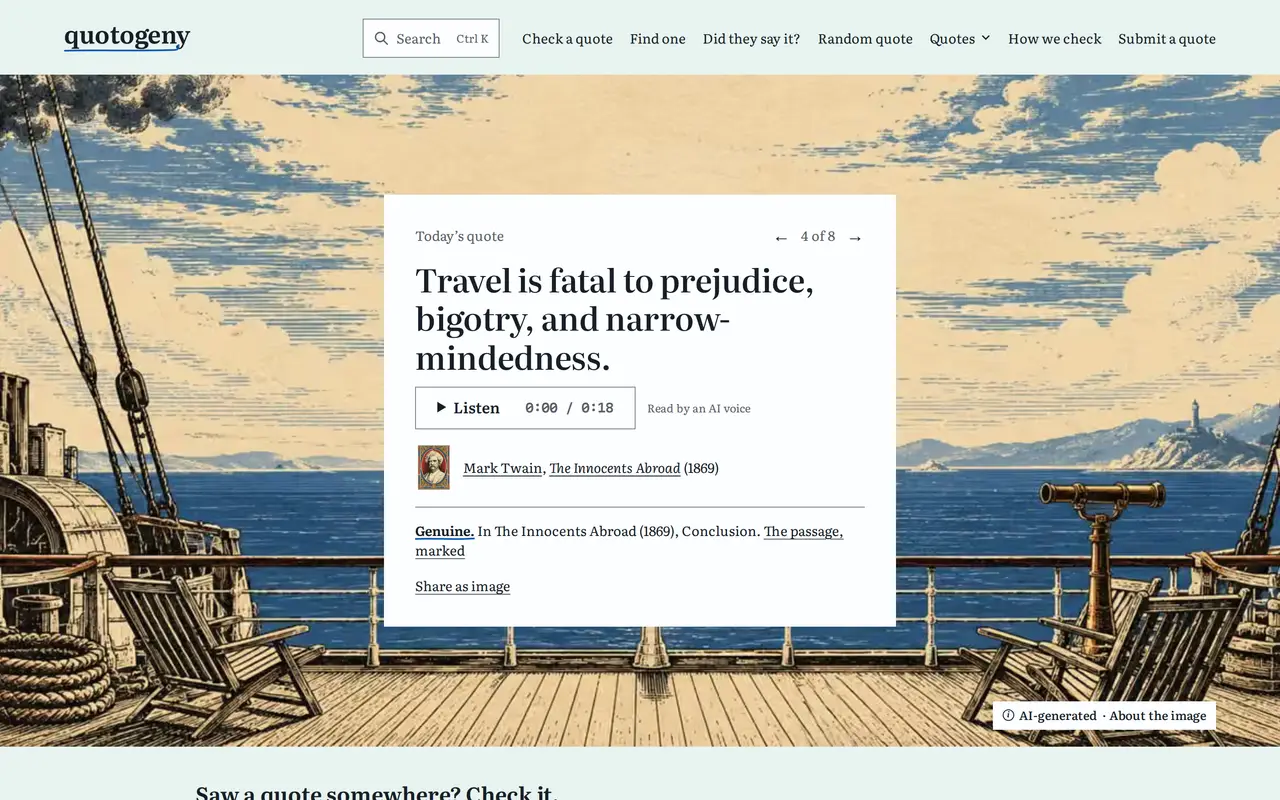
A lab of style generators
Morphogeny
Each generator grows one style from the Stylogeny atlas: Op Art, Swiss, Bauhaus, De Stijl, Memphis, Concrete, Pixel and kinetic type. Its controls are the style’s design choices, named and explained. It runs in your browser, with no account.
- Move a design choice and watch the style answer
- Export a vector SVG, a PNG at print size or a looping video
- Keep the recipe: it redraws exactly the same picture every time
Branched from Stylogeny on 23 October 2026. It reads Stylogeny’s styles, choices and palettes, and draws them with code instead of an image model.
- 8
- generators
- 3
- export formats: SVG, PNG and video
- 0
- image models used